leverage
Give me a lever long enough, and a place to stand, and I will move the earth.
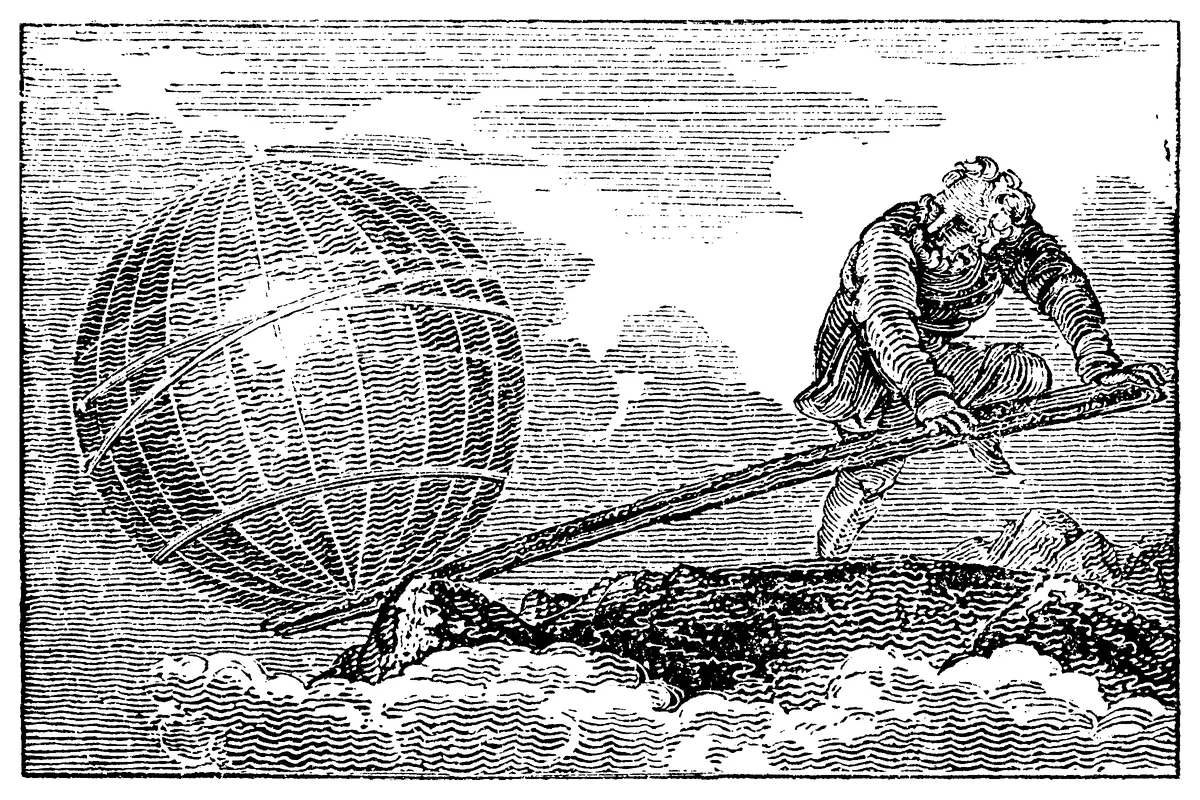
Leverage in Today's World
Forms of Leverage
1. Labor (permissioned)
Other people working for you. Oldest form. Scales poorly—messy to manage, requires leadership, risk of mutiny. Inputs and outputs stay relatively coupled.
2. Capital (permissioned)
Money multiplies every decision you make. Scales much better than labor. Dominant leverage of the 20th century (bankers, fund managers, finance CEOs). Still requires someone to give you the capital.
3. Code (permissionless)
Zero marginal cost of replication. An army of robots working while you sleep. Dominant leverage of the 21st century (Bezos, Zuckerberg, Gates). No permission needed—just a computer. Creates the 1,000x programmer phenomenon: outputs completely decouple from inputs.
4. Media / Content (permissionless)
Books, podcasts, video, tweets. Also zero marginal cost of replication. Builds brand and audience that compounds. Permissionless like code.
5. AI Agents (permissionless, new)
Arguably a superset of code leverage. Key differences from traditional code:
- Cognitive labor, not just automated labor. Code automates defined processes. AI agents handle ambiguous, judgment-heavy tasks that previously required humans.
- Parallel intelligence. You can spin up N instances of near-expert-level reasoning simultaneously. Not one robot army doing one thing—many agents doing many different things.
- Single-person team. For the first time, one person can wield the productive capacity of an entire team across varied domains (writing, research, coding, analysis, design).
- Scales like code, substitutes for labor. It has the permissionless, zero-marginal-cost property of code, but replaces the kind of work that previously required the worst form of leverage (labor).
What Unlocks What
| Leverage | Unlocks |
|---|---|
| Labor | Scale through people, but linearly and messily |
| Capital | Multiplicative decision-making; compounds via returns |
| Code | Infinite replication at zero cost; decouples input from output |
| Media | Audience, brand, distribution; compounds over time |
| AI Agents | Cognitive scale—parallel expert-level work without hiring, managing, or getting permission |
The Meta-Framework
The through-line across both sources: the history of leverage is the progressive decoupling of inputs from outputs. Labor barely decouples them. Capital decouples somewhat. Code decouples massively. AI agents decouple them further by making the type of work that can be decoupled much broader—now including judgment and reasoning, not just execution.
The key enablers that let you use any of these: specific knowledge (hard to train others to do), accountability (skin in the game), and the ability to sell or build.
Forget rich versus poor, white-collar versus blue. It's now leveraged versus un-leveraged. — Naval Ravikant
Sources: The Almanack of Naval Ravikant, personal notes on AI leverage.